

16 Oct The Life Cycle of a Bedbug in Broken Arrow, OK
Understanding the Bedbug Development Process
At Action Pest Management, with over 30 years of experience serving Broken Arrow, Tulsa, and surrounding communities, we’ve encountered countless bedbug infestations. Owner Mark Howard and our professional pest control specialists understand that knowing the bedbug life cycle is crucial for effective treatment and prevention. This knowledge enables our team to develop targeted strategies that interrupt the reproductive cycle at multiple stages, ensuring a more comprehensive eradication.
Why the Life Cycle Matters for Treatment Success
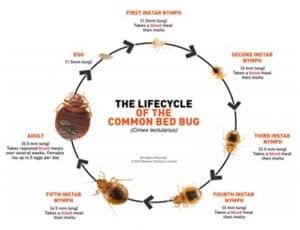
Bedbugs undergo what’s called “incomplete metamorphosis,” meaning they don’t have a pupal stage like many other insects. Instead, they progress through five nymph stages before reaching adulthood, with each stage requiring a blood meal to advance.
This continuous feeding pattern is why bedbug infestations can quickly become overwhelming for homeowners and property managers. Understanding these stages helps our specialists time treatments effectively and explains why multiple service visits are often necessary for complete elimination.
FIRST STAGE LARVA 1.5 mm Long. Takes a Blood Meal, then molts
SECOND STAGE LARVA 2mm Long. Takes a blood meal, then molts
THIRD STAGE LARVA 2.5 mm long. Takes a blood meal, then molts
FOURTH STAGE LARVA 3 mm. Takes a blood meal, then molts
FIFTH STAGE LARVA 4.5 mm Long. Takes a blood meal, then molts
ADULT 5.5 mm LongTakes REPEATED blood meals over several weeks. Females lay up to 5 eggs per day continuously.
The Rapid Reproduction Challenge
Adult female bedbugs are incredibly prolific, laying up to five eggs daily throughout their lifespan, which can extend several months under optimal conditions. In Oklahoma’s climate, where temperatures and humidity levels often favor bedbug development, a single pregnant female can lead to thousands of offspring within just a few months. This exponential growth pattern explains why early detection and professional intervention are critical for successful bedbug control.
Temperature and Development Speed
Environmental factors significantly influence bedbug development rates. At room temperature (approximately 70-80°F), the complete life cycle, from egg to adult, typically takes 6-8 weeks. However, in warmer conditions common during Oklahoma summers, this process can accelerate; while cooler temperatures may slow development, they rarely eliminate populations. Our pest control specialists take into account these environmental factors when developing treatment schedules and follow-up protocols.
Professional Intervention Strategies
Action Pest Management’s approach to bedbug control targets multiple life stages simultaneously. We use integrated pest management techniques that combine targeted chemical treatments, heat treatments when appropriate, and thorough inspection protocols. Our team educates clients about preventing re-infestations and provides ongoing monitoring services to ensure long-term success against these persistent pests.
Contact Action Pest Management today for a professional inspection and customized treatment plan. Our experienced team is ready to help you reclaim your peace of mind and eliminate these persistent pests for good.
Frequently Asked Questions
How long is the lifecycle of a bed bug?
It takes about five to six weeks to develop from egg to adult in warm conditions, passing through five nymph stages along the way. Cooler temperatures slow development. Adults can live for several months.
How fast do bed bugs multiply?
A female can lay one to five eggs a day and several hundred in her lifetime, so a small group can grow into a large infestation within a few months. Warm rooms and regular blood meals speed this up. That is why early treatment matters.
Can you see all stages of bed bugs?
Yes, with a close look. Eggs are tiny and pearly white, nymphs are pale and translucent, and adults are reddish brown and about the size of an apple seed. The smaller stages are easy to miss without a flashlight and magnifier.
What kills bed bugs permanently?
Heat treatment or a thorough professional insecticide program, combined with mattress encasements and repeated follow-up, is most likely to eliminate bedbugs. No single spray or home remedy reliably kills every life stage. Because eggs hatch later, follow-up visits are usually needed.
Can you starve out bed bugs?
Starving them out is rarely practical, because bedbugs can survive many months without a meal, and longer in cool conditions. Leaving a home empty usually does not solve the problem. Professional treatment is faster and more reliable.
Contact Action Pest Management today for a free quote on pest control in Broken Arrow, OK.