

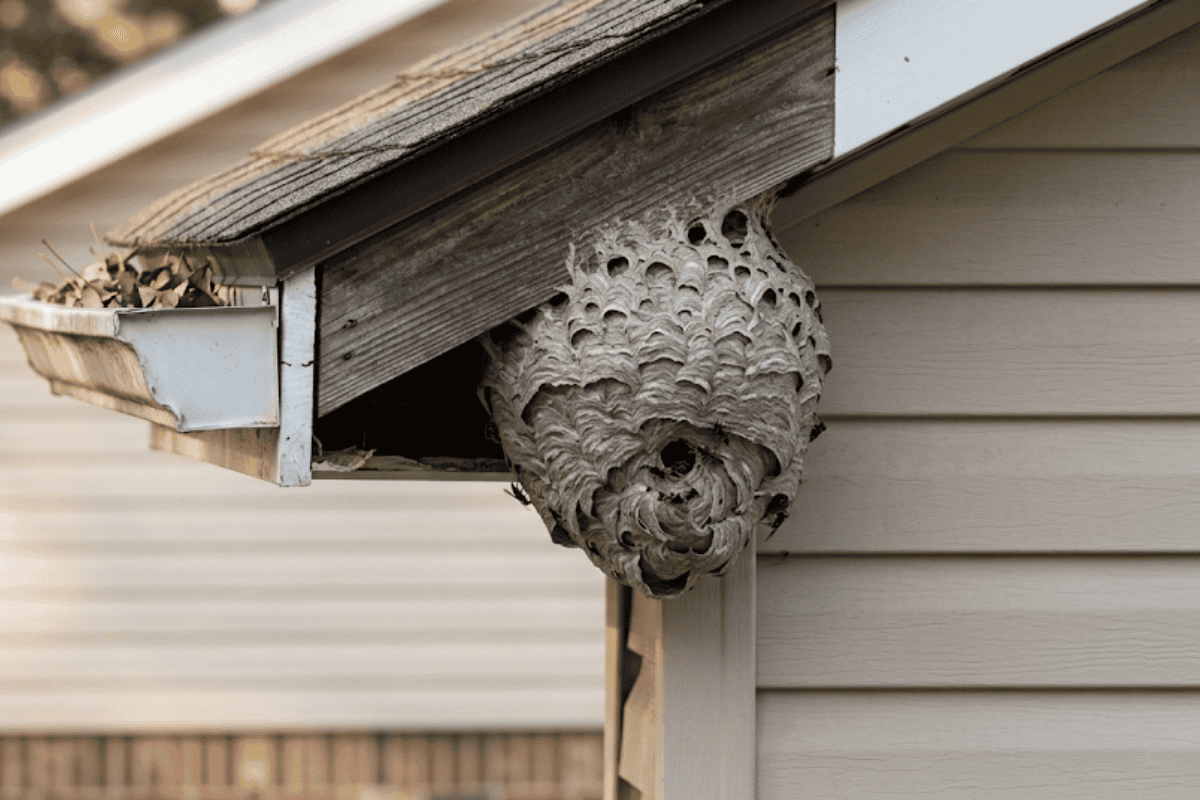
07 Sep Is a Wasp Nest Still Active? Here’s How to Tell
In Broken Arrow and the rest of the Tulsa metro, wasp colonies typically die off with the first hard frost, usually sometime between late October and mid-November, but the papery gray nest hanging under your eaves doesn’t disappear with them. That’s the confusing part: a nest can sit there, fully built and intact, for months after every wasp inside it is gone. Before you get anywhere near it, it helps to know whether you’re looking at an abandoned shell or a colony that’s still very much home to something with a stinger. Figuring out if a wasp nest is still active comes down to watching for a handful of clear signs, not guessing.
Watch the Entrance Before You Do Anything Else
The single most reliable test is traffic. Stand at a safe distance, at least 15 to 20 feet away, and watch the entrance point for two or three minutes during a warm, sunny part of the day. According to OSU Extension, mated female wasps seek overwintering sites in the fall while the rest of the colony dies off, so an active nest will show a steady stream of wasps flying in and out, while an abandoned one will show nothing at all, no matter how long you watch.
A few other signals back up what you see at the entrance:
- Wasps carrying chewed wood pulp or debris into the nest, which means the colony is still building
- A faint buzzing hum coming from inside the nest structure itself
- One or more wasps hovering near the opening as if guarding it
- Wasps returning to the same exact spot repeatedly rather than just passing through
- Fresh gray or tan papery material on the outer layer, which looks noticeably different from the dull, weathered surface of an old nest
Why the Season Matters as Much as the Nest Itself
Timing tells you almost as much as observation does. Paper wasp and yellowjacket colonies are annual: they build, grow, and die within a single season, and SDSU Extension notes that spring is the best time to catch nests early, before soffits, eaves, and shutters end up hosting a colony that’s grown large enough to surprise you by late summer. In the Broken Arrow area, that means a nest you spot in June or July is almost certainly active and growing, while the same-looking nest in December is very likely an empty shell left over from last summer. Either way, the nest itself won’t be reused. An active wasp nest is usually easy to spot with many wasps going in and out of a single spot or hole, so if you’re checking a nest in the dead of winter and see zero activity across multiple checks, you’re probably safe to leave it alone until spring, when it’s worth knocking down before a new queen has a chance to rebuild nearby.
What to Do Once You’ve Confirmed It’s Active
If you’ve watched the entrance and confirmed steady traffic, the next move is not to spray it yourself. Wasps can sting repeatedly, and a disturbed colony will defend its nest aggressively as a group. If anyone in your household has a known allergy to stings, treat any confirmed-active nest as a same-day call, not a weekend project. Some people may experience severe allergic reactions to wasp stings, which require immediate medical attention, and many people in the United States die each year from allergic reactions to stinging insects. That risk is exactly why a professional wasp treatment, not a can of store-bought spray from a ladder, is the right call once you’ve confirmed a nest is occupied.
Why Choose Action Pest Management for Wasp Removal
Confirming activity is only half the job. Paper wasps and yellowjackets build in different spots and require different approaches, so our technicians identify the species before treatment starts, since a ground-level yellowjacket nest under a shed and a paper wasp nest tucked into a soffit call for different tools and different distances from the structure. We also treat at the entrance point itself rather than spraying the visible surface of the nest, because a surface-only application often just scatters an agitated colony instead of eliminating it. Because Broken Arrow summers push wasp activity into late September most years, we don’t assume a nest found in early fall is winding down. We check it the same way described above before deciding on treatment. And once a nest is confirmed empty, we can tell you that too, saving you the cost and hassle of treating something that’s already dead.
Active vs. Abandoned Wasp Nest: Quick Comparison
| Sign | Active Nest | Abandoned Nest |
|---|---|---|
| Entrance traffic | Steady wasps flying in and out | No movement over several minutes of watching |
| Sound | Faint buzzing from inside the nest | Silent |
| Nest surface | Fresh gray or tan papery texture | Dull, weathered, sometimes grayish-brown and brittle |
| Season | Spring through early fall in Oklahoma | Late fall through winter, after the first hard frost |
| Guard behavior | Wasps hovering near or patrolling the entrance | No wasps present at all |
Every fact in that table matches what’s described above: entrance traffic, sound, surface freshness, seasonal timing, and guard behavior are the same five signs to check in person before deciding whether a nest needs professional attention.
If you’re checking a nest you found while comparing notes with our wasp control page for the wasp problem, or you spotted something similar to what we described in hidden pest problem, the same watch-and-wait approach applies before you commit to a treatment plan.
Confirmed an Active Nest? Get It Handled Safely. Contact us for a free estimate and same-week wasp treatment.
Frequently Asked Questions
How can you tell if a wasp nest is abandoned?
An abandoned nest shows no wasps entering or exiting over several minutes of observation, no buzzing sound, and a dull, weathered surface. It’s most reliable to check on a warm, sunny day, since wasps are less active in cool or rainy weather even when a nest is occupied.
Do wasps come back to the same nest every year?
No. Paper wasp and yellowjacket nests are used for a single season only. The colony dies off in the fall except for newly mated queens, which overwinter separately and build entirely new nests elsewhere the following spring.
Is it safe to knock down an old wasp nest myself?
If you’ve confirmed zero activity across multiple checks during warm daylight hours, a nest is generally safe to remove. When in doubt, treat any nest as active and call a professional instead of testing it by hand.
What time of day are wasps most active?
Wasps are most active during warm daylight hours, typically midday into early afternoon. Early morning and evening checks can be misleading, since even an active colony may show little outdoor traffic during cooler hours.
Why do wasps build nests in the same general area of a house?
Eaves, soffits, and sheltered wall cavities offer protection from wind and rain, which is what wasps look for regardless of whether a previous colony nested nearby. A new queen may choose a similar spot on the same structure even though she’s not reusing the old nest itself.