28 Sep How Long Should Windows Stay Closed After Spraying in Tulsa, OK?
A lot of homeowners assume that once a sprayed surface feels dry to the touch, it’s fine to throw the windows back open and move on with the day. That’s a reasonable guess, but it’s not quite right: dry to the touch and safe to re-enter aren’t the same standard, and pesticide labels almost never use “dry” as the benchmark for when a room is actually clear. Instead, most labels specify a re-entry interval measured in time, commonly somewhere between 30 minutes and 2 hours for indoor residential products, and that clock is what actually determines how long windows should stay closed after pest spraying, not how the surface feels.
Why Windows Matter More Than People Expect
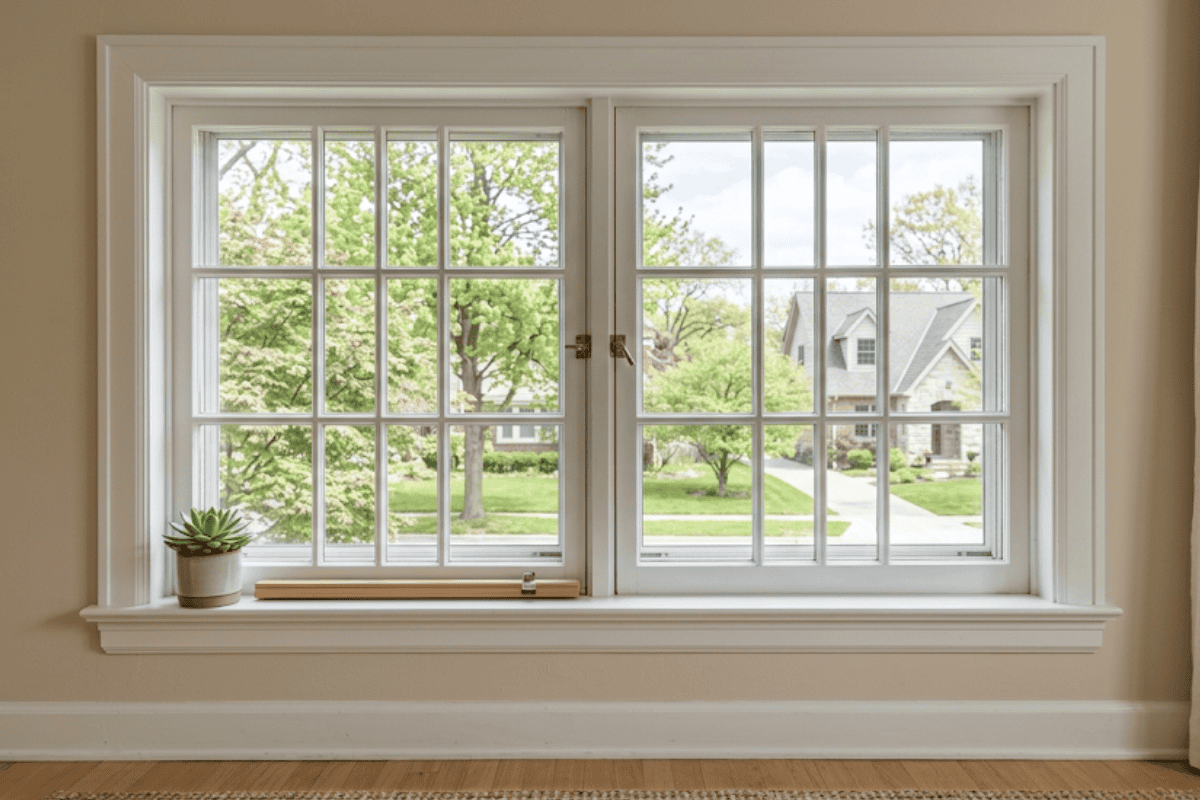
Keeping windows closed during and immediately after an indoor application isn’t about trapping the pesticide inside to work harder. It’s the opposite: closed windows and doors during application keep the product contained to the areas being treated, so it doesn’t drift into rooms that weren’t sprayed, and closed conditions for a short period afterward give the product time to settle and bind to the surface it was applied to, rather than becoming airborne again the moment a breeze moves through. Once that settling period has passed, the goal flips entirely. You want the windows open, not closed, so fresh air can clear out any remaining vapor.
What Pesticide Labels Actually Say
This isn’t guesswork. Regulators require this exact information to appear on the product itself. According to Health Canada, pesticide labels typically list either a re-entry interval, a restricted-entry interval, or both, and the difference matters: a re-entry interval is the period during which no one should enter the treated site at all, while a restricted-entry interval more often applies to agricultural or larger-scale settings, limiting exposure for workers rather than homeowners. Real label language tends to be specific rather than vague, with examples ranging from “leave room closed for 1/2 hour, ventilate thoroughly before re-entry” to “do not enter or allow entry for 2 hours following application.”
How Long, By Treatment Type
The window-closed period isn’t the same for every job, which is exactly why we tell you the specific number for your treatment rather than a rule of thumb.
- Crack-and-crevice or spot treatment: windows don’t typically need to stay closed at all, since so little product is airborne
- Indoor baseboard or perimeter spray: commonly 30 minutes to 2 hours closed, then open windows to ventilate
- Indoor fogger or space treatment: the longest closed period, often 2 hours or more, since the product fills the entire room’s air
- Outdoor perimeter spray near windows: keep nearby windows closed until the spray has dried, typically within an hour, to avoid drift entering through screens
The Mistake Worth Avoiding
The most common misstep isn’t opening windows too soon. It’s opening them too soon and then closing them again right away because someone smells the treatment and panics. That in-and-out approach can actually extend how long odor lingers, since it interrupts the steady airflow that clears a room fastest. The NPIC recommends ventilating by opening windows and doors and running a fan continuously once the closed period ends, rather than cracking a window for a few minutes and shutting it again.
Why Choose Action Pest Management for Clear Timing
We tell you the specific window-closed time for your treatment before we leave, not a generic “give it a couple hours.” That number comes straight from the product label for whatever we used that day, since fogger treatments, baseboard sprays, and spot treatments all carry different requirements, and we follow minimizing pesticide exposure guidance that calls for using the least product necessary in the first place. For outdoor perimeter work, we factor in which windows sit closest to the treated foundation line and flag those specifically, rather than treating every window in the house the same. And because label requirements can differ from one EPA-registered product to the next, we don’t rely on memory. We check the pesticide label’s specific directions for that exact product before we tell you a number.
Window Closure Time by Treatment Type
| Treatment Type | Keep Windows Closed | Then Ventilate For |
|---|---|---|
| Crack-and-crevice spot treatment | Not typically required | Not typically required |
| Indoor baseboard/perimeter spray | 30 minutes to 2 hours | 1 to 2 hours after reopening |
| Indoor fogger/space treatment | 2 hours or more | Several hours, active airflow |
| Outdoor perimeter spray | Until dry, typically under 1 hour | Not usually needed afterward |
Every timeframe in that table matches what’s described above: the closed period exists so the product can settle where it was applied, and ventilation afterward is what actually clears any lingering vapor once that settling window has passed.
If pest activity has been a recurring issue the way we described in winter pest infestations, you’ve probably had a treatment or two already and know the drill. We’ll still walk you through the specific timing every time, since it can change based on the product and the season. Our full pest control services page covers what to expect for each type of treatment.
Not Sure How Long to Keep Your Windows Closed? Contact us for a free consultation.
Frequently Asked Questions
Do I need to close all the windows in my house during pest spraying?
Only the windows in and near the room or area being treated typically need to stay closed. Rooms unrelated to the treatment usually don’t need special precautions unless your technician says otherwise.
What happens if I open windows too early after spraying?
Opening windows before the closed period ends can let product drift into untreated areas or reduce how well it settles on the treated surface. It’s not usually dangerous, just less effective and potentially more prone to lingering odor.
How long after outdoor spraying can I open windows near the yard?
Once the outdoor application has fully dried, typically within an hour depending on weather, nearby windows can generally be reopened. Windy or rainy conditions can extend that timeframe.
Can I run my air conditioning during a pest treatment?
It depends on the treatment. For most spot and crack-and-crevice applications, yes. For fogger or space treatments, your technician may recommend turning off central air temporarily so the system doesn’t pull treated air throughout the house.
Is a closed-window period the same for every pesticide product?
No. Re-entry times vary by product and application method, which is why the specific label for that product, not a general rule of thumb, determines the actual number.