14 Sep How Long Does Pest Control Spray Smell Last in Tulsa, OK?
Most pest control odors fade within two to four hours once a treated area has been properly ventilated, but the smell you notice and the underlying volatile organic compounds causing it don’t always clear on the same timeline. Indoor VOC levels from household products, pesticides included, can run several times higher than outdoor air until a space is properly ventilated, which is exactly why so many people ask how long pest control spray smell sticks around. The honest answer depends on what was sprayed, where, and how the space was ventilated afterward.
What Actually Causes the Smell
The odor you notice after a treatment usually isn’t coming from the active ingredient that kills insects. It’s the inert carrier ingredients, the solvents that help the product spread and stick to surfaces, that produce most of the smell, and those carriers are often far more volatile than the pesticide itself. This distinction matters for how long pest control spray smell lasts, because a product applied as a thin, targeted spray into cracks and crevices carries far less of that solvent load into the open air of a room than a broadcast spray covering baseboards or an entire floor.
How Long the Smell Typically Lasts, By Treatment Type
Timing depends heavily on the application method our technicians use, which is exactly why we tell customers what to expect before we ever load the sprayer.
- Crack-and-crevice or targeted spot treatments: minimal odor, usually gone within an hour of drying
- Baseboard or perimeter spray treatments: noticeable for roughly 2 to 4 hours with windows open
- Broadcast interior treatments (larger surface areas): can take several hours to a full day to fully clear, especially in a closed home
- Fogger or space treatments: the longest-lasting odor, since these fill the entire air space rather than targeting specific surfaces
Standard pesticide labels reflect this directly. Language pulled straight from EPA-registered product labels commonly instructs that a room should be ventilated for 2 hours after spraying before anyone re-enters, which lines up with what most Broken Arrow homeowners notice: the sharpest smell fades within that same window, even though faint traces can linger longer in carpet fibers or upholstery.
Why Ventilation Speeds This Up So Much
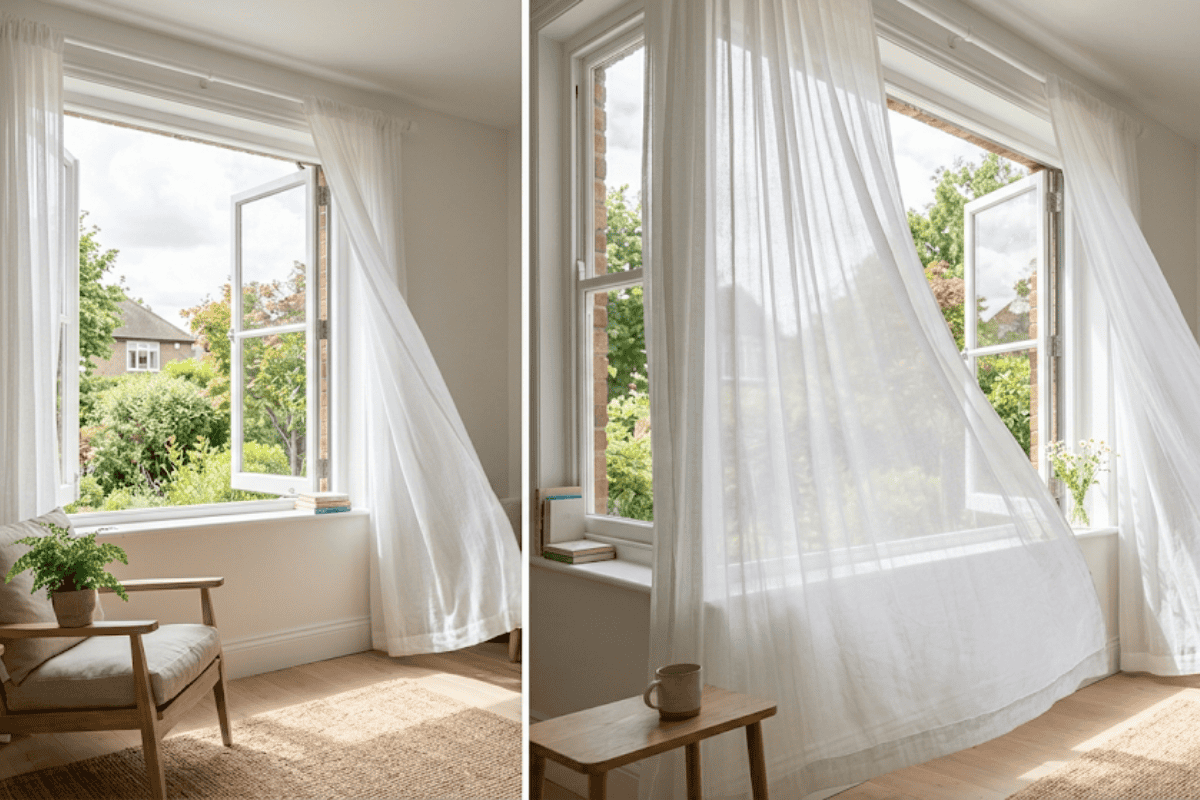
Open windows and moving air are doing real work, not just making you feel better about the smell. The NPIC, a program run through Oregon State University, recommends ventilating a treated home by opening windows and doors and using a fan upon your return, specifically because moving fresh air through a space dilutes and clears lingering solvent vapor far faster than a sealed room ever will. If you can run a ceiling fan or box fan pointed toward an open window for the first hour after your technician leaves, you’ll usually notice the smell drop off noticeably faster than if the house stays closed up.
When a Lingering Smell Is Worth a Call
A fading chemical smell that clears within a few hours is normal and expected. What’s not normal is a strong odor that hasn’t budged after a full day, or one that triggers headaches, eye irritation, or breathing discomfort in anyone in the home. State health officials have flagged cases where an unusual odor after a pesticide application, combined with symptoms like headaches or dizziness, is worth evacuating the space and following up rather than waiting it out. If that happens after one of our treatments, call us. It’s rare, but we’d rather come back out than have you guessing.
Why Choose Action Pest Management for Odor-Conscious Treatment
We default to targeted, crack-and-crevice application over broadcast spraying whenever the pest and the label allow it, which lines up with minimizing pesticide exposure guidance recommending the least amount of product needed for the job, and it’s the single biggest factor in how much odor you’ll notice afterward. Before we treat, we walk you through exactly which rooms are being sprayed and for how long you should keep them ventilated, so you’re not guessing at re-entry times after we’ve already left. We also choose lower-odor, EPA-registered formulations when a job calls for a broader application, rather than defaulting to whatever’s fastest to apply. And because Broken Arrow homes vary a lot in ventilation, from older houses with fewer operable windows to newer builds with central air, we adjust our recommendation on how long to air out a room based on your specific house, not a generic script.
Odor Duration by Application Type
| Application Type | Typical Dry Time | Recommended Ventilation | When Odor Usually Fades |
|---|---|---|---|
| Crack-and-crevice spot treatment | Under 1 hour | Not usually required | Within an hour |
| Baseboard/perimeter spray | 1 to 2 hours | 2 hours, windows open | 2 to 4 hours |
| Broadcast interior treatment | 2 to 4 hours | Several hours, active airflow | Several hours to a full day |
| Fogger/space treatment | Several hours | Extended, until room is fully aired | Longest of all treatment types |
Every duration in that table matches what’s described above: spot treatments clear fastest because they cover the least surface area, broadcast and fogger treatments take longest because they release the most airborne solvent, and ventilation time shortens all of it.
If you’ve read our post on year-round pest control, you already know we lean toward fewer, more targeted treatments rather than heavy broadcast spraying whenever the pest allows it, which is a big part of why our customers report less lingering odor than they expected. It’s the same philosophy behind our treatments across every service we offer.
Have Questions Before Your Next Treatment? Contact us for a free consultation and we’ll walk you through exactly what to expect.
Frequently Asked Questions
Is it safe to stay in the house during pest control treatment?
For most standard treatments, yes, though it’s best to leave the specific room being treated until it’s dry and briefly aired out. Ask your technician which areas need extra ventilation time based on the products used that day.
Does pest control spray smell mean it’s still working?
No. The smell comes mostly from inert carrier ingredients, not the active pesticide, so a treatment can still be fully effective long after the odor has faded completely.
Can I speed up how fast the smell clears?
Yes. Open windows, run fans, and use exhaust vents in the treated area for the first hour or two after treatment. Moving air clears lingering odor significantly faster than a closed-up room.
Why does the smell seem stronger in some rooms than others?
Rooms with less airflow, lower ceilings, or more soft surfaces like carpet and upholstery tend to hold odor longer, since fabric fibers absorb and slowly release airborne particles over time.
Should pets be kept out of a treated room?
Yes, until the treated area is fully dry and has had time to ventilate. Ask your technician for a specific re-entry time for pets, since it can differ slightly from the guidance for people.